
Aman Hospital is a luxurious healthcare facility established in Doha, Qatar, and owned by Jaidah Holdings.
This new 100+ bed hospital will define the future of healthcare delivery in Qatar and the region by combining unparalleled professional expertise, cutting-edge technology, state-of-the-art equipment, service excellence, a relentless pursuit of medical innovation, and deluxe hospitality, all with a focus on patient-centered care.
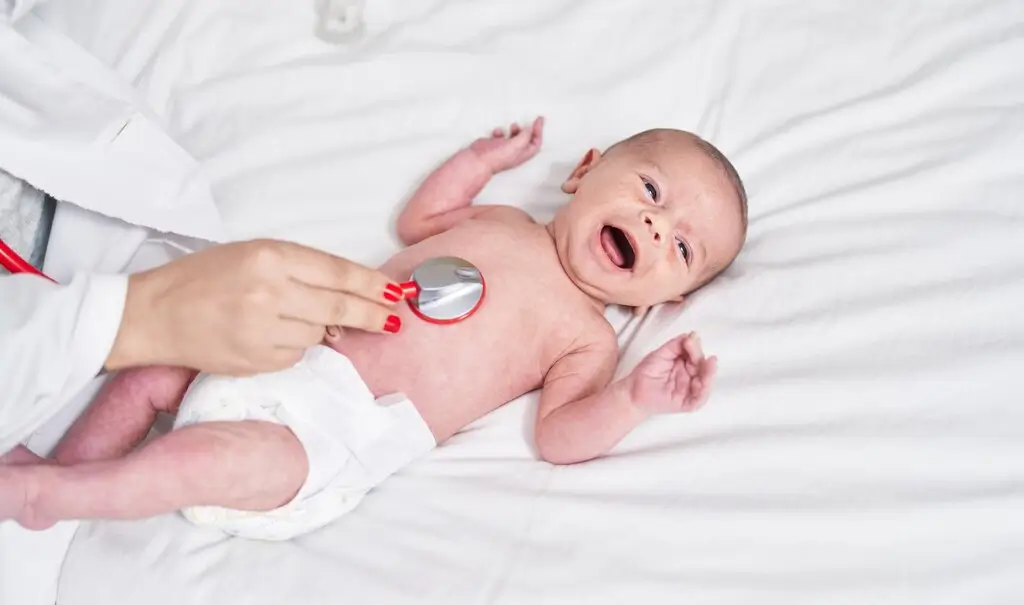
Newborn screening is a preventive healthcare test, not a diagnostic confirmation. It identifies whether a baby is at risk of developing serious conditions.
Newborn screening test detects:
Clinical purpose:
Most babies with these disorders appear healthy. This makes neonatal screening essential, even when no symptoms exist.
Qatar operates a centralized newborn screening program supported by leading healthcare institutions.
Key entities involved:
Program attributes:
This system ensures universal access to newborn screening in Qatar, making it a benchmark in regional neonatal healthcare.
Timing plays a critical role in screening accuracy and reliability.
Standard timeline:
Process flow:
If discharged early, a follow-up newborn screening test is required.
The heel prick test newborn procedure is simple, safe, and widely used.
Step-by-step process:
Laboratory screening includes:
Additional screening components:
This multi-layered screening approach strengthens early diagnosis accuracy.
The newborn screening program Qatar targets high-risk conditions.
Categories of diseases screened:
Screening panels continue to expand with advancements in genetic testing technologies.
Newborn screening results fall into structured categories.
Aspect | Newborn Screening | Diagnostic Testing |
Purpose | Risk detection | Disease confirmation |
Accuracy | Indicative | Confirmatory |
Timing | Early (24–72 hrs) | After abnormal result |
Outcome | Requires follow-up | Final diagnosis |
Result Type | Meaning | Next Step |
False Positive | Abnormal result, healthy baby | Additional testing |
False Negative | Normal result, underlying issue | Clinical monitoring |
Key insight:
A re-test newborn screening is part of standard clinical protocol.
Reasons for re-test:
Parent actions:
A re-test does not confirm disease. It ensures accurate diagnosis through verification.
Many newborn conditions remain silent in early stages.
Clinical reality:
High-value outcome:
This makes newborn screening essential for every child.
Factor | Early Detection | Late Diagnosis |
Treatment start | Immediate | Delayed |
Disability risk | Reduced | Increased |
Survival rate | Higher | Lower |
Development outcomes | Improved | Compromised |
Core benefits:
Newborn screening strengthens national public health outcomes.
Before leaving hospital:
If discharged early:
After testing:
If abnormal result received:
Newborn screening maintains high sensitivity, but limitations exist.
Accuracy factors:
Limitations:
Continuous program updates improve screening accuracy and coverage.
Feature | Qatar | Global Standard |
Timing | 24–72 hrs | 24–72 hrs |
Coverage | >98% | Varies |
Conditions screened | 30+ | 20–50+ |
Cost | Free | Mixed |
Qatar aligns with international neonatal screening standards, supported by institutions like HMC and Sidra Medicine.
Aman Hospital delivers premium, patient-centered neonatal care within a luxury healthcare environment.
Clinical strengths:
Parents seeking high-end medical support can access Neonatology Care Services at Aman Hospital, where screening, diagnosis, and treatment align within a single care pathway.
This approach ensures:
Is newborn screening mandatory in Qatar?
National programs strongly recommend screening for all newborns.
Is the newborn screening test free?
Yes, screening is provided free under public healthcare programs.
How many diseases are screened?
More than 30 genetic, metabolic, and endocrine disorders.
What happens after an abnormal result?
Confirmatory diagnostic testing is required.
Can screening detect all diseases?
Screening targets specific conditions, not all possible diseases.
Is the heel prick test safe?
Yes, it is a safe and routine procedure.
Newborn screening in Qatar establishes the foundation of preventive healthcare. It enables early diagnosis, reduces disease burden, and improves lifelong outcomes.
Parents who follow the screening timeline, respond to results, and complete re-tests ensure the best possible start for their child.
Healthcare systems, led by Hamad Medical Corporation, Sidra Medicine, and advanced providers like Aman Hospital, continue to strengthen neonatal care through early detection and integrated treatment pathways.
Book your consultation with Dr. Maisa Salman at Aman Hospital today.
The first private Hospital in Qatar to achieve JCI accreditation
Follow Aman
Contact
Quick Links
Centers of Excellence
© 2025, Aman Hospital. All Rights Reserved.
Designed & Developed by GTonics
Ms. Wazne received her Bachelor of Science degree in Pharmacy from the Lebanese American University in 2011 . She completed her Masters degree in Clinical Pharmacy from the Lebanese University. Ms. Wazne has worked at the American University of Beirut Medical Center for more than ten years. Ms. Wazne has given a variety of oral presentations to nurses, and pharmacists on local and national level . She has been certified from Harvard Medical School in Immuno-oncology and Cancer Genomics. She is an active member in the Order of Pharmacists of Lebanon. Her professional interests include medication safety and research.
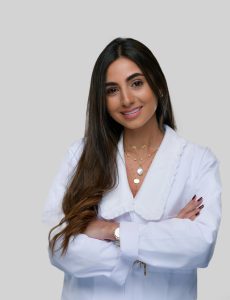
Sirine Abou Al Hassan is a US. registered clinical dietitian with extensive experience in nutritional management of chronic and diet-related diseases. Previously, Sirine worked as clinical dietitian specialized in obesity weight management, Child and Maternal Health and Eating Disorders. She graduated from University College London with a masters of science in Clinical Nutrition and Eating Disorders; Following on from a Bachelors of Science in Nutrition and Dietetics-Coordinated Program from the American University of Beirut, both with distinction