
Aman Hospital is a luxurious healthcare facility established in Doha, Qatar, and owned by Jaidah Holdings.
This new 100+ bed hospital will define the future of healthcare delivery in Qatar and the region by combining unparalleled professional expertise, cutting-edge technology, state-of-the-art equipment, service excellence, a relentless pursuit of medical innovation, and deluxe hospitality, all with a focus on patient-centered care.
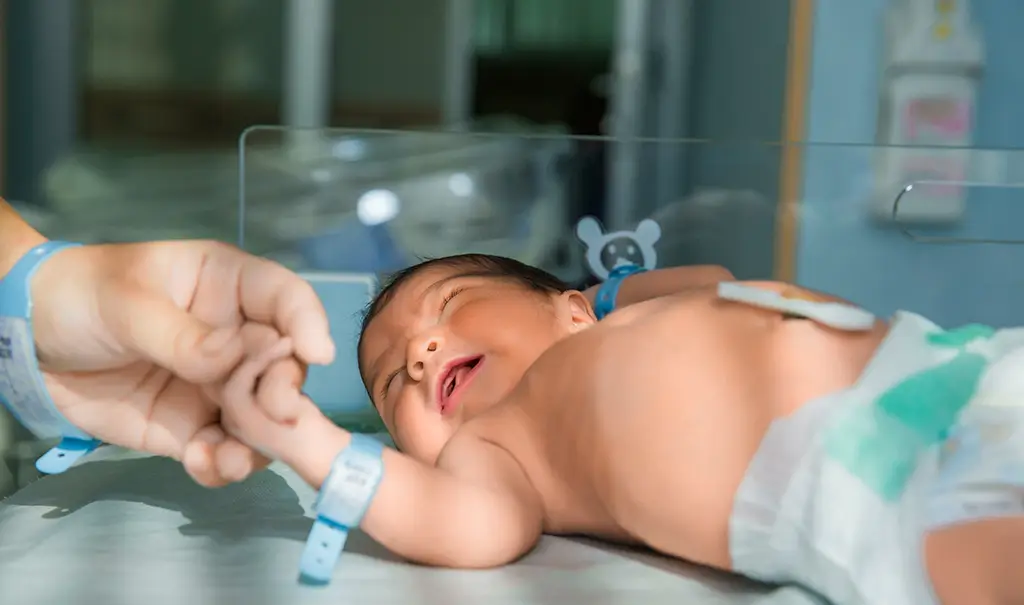
Neonatal care refers to the medical and supportive care provided to newborns during the first 28 days of life, a phase where adaptation to the external environment determines survival and long-term health outcomes.
Neonatal care includes:
Neonatologists and pediatric specialists manage this stage using evidence-based protocols designed to improve survival rates, neurological development, and immune stability.
Neonatal care services in Qatar operate across multi-level care systems, allowing newborns to receive appropriate care based on their medical condition.
Care Level | Purpose | Key Features |
Routine Care | Healthy newborns | Feeding, monitoring |
Special Care Nursery | Mild complications | Observation, oxygen support |
NICU (Neonatal Intensive Care Unit) | Critical conditions | Ventilators, incubators, continuous monitoring |
Hospitals in Qatar integrate advanced NICU infrastructure with family-centered care approaches, ensuring both medical outcomes and parental reassurance.
A newborn may require NICU care when medical stability is compromised. Early identification of these conditions improves outcomes significantly.
These conditions demand continuous monitoring, respiratory support, and specialized neonatal intervention.
Premature babies represent one of the most critical segments within neonatal care.
Premature babies often have:
NICU care bridges this gap by providing a controlled environment that mimics womb conditions and supports gradual development.
The Neonatal Intensive Care Unit acts as a life-support ecosystem for newborns who need advanced care.
This structured environment enables premature babies to stabilize, grow, and transition safely toward discharge.
NICU care relies on a combination of technology, expertise, and standardized protocols.
These teams follow evidence-based neonatal care practices focused on growth optimization, infection control, and long-term health outcomes.
Medical care alone does not define recovery. Parental involvement directly influences emotional stability and developmental progress.
These actions regulate heartbeat, improve breathing patterns, and strengthen the parent-child connection.
Discharge from NICU marks a major step, yet it introduces new responsibilities.
Parents receive training on feeding techniques, hygiene, and early warning signs before leaving the hospital.
Post-discharge care ensures continuity of neonatal support outside hospital settings.
Aspect | NICU | Home Care |
Monitoring | Continuous | Periodic |
Equipment | Advanced | Basic |
Supervision | Medical staff | Parents + caregivers |
Emotional comfort | Moderate | High |
This transition phase remains one of the most underrated yet critical SEO and medical gaps, where proper guidance prevents complications.
A structured home environment supports recovery and growth.
A calm environment supports sleep cycles and immune stability.
Early detection of complications prevents serious outcomes.
Immediate consultation with pediatric specialists ensures timely intervention.
Premature babies require structured follow-up care.
Early interventions improve neurological and physical development outcomes.
Selecting the right provider directly impacts neonatal outcomes.
At this stage, choosing a premium healthcare facility becomes essential.
Aman Hospital represents a luxury medical care center in Qatar, combining advanced technology with patient-centered care.
Its multidisciplinary approach ensures that newborns, premature babies, and families receive comprehensive support across every stage of care.
Beyond neonatal services, Aman Hospital delivers excellence across specialties. Patients seeking precision-driven diagnostics and advanced treatment pathways can also explore Best Neurology services for complete medical care integration.
Neurological health often intersects with neonatal and developmental conditions. Aman Hospital’s neurology department strengthens this ecosystem through advanced diagnostics and personalized treatment plans.
Neurology services include:
The department operates under expert leadership, including Dr. Rechdi Ahdab, a neurology consultant with over 20 years of experience and extensive research contributions .
This integrated care model ensures continuity from neonatal stages to long-term neurological health.
These questions align decision-making with both clinical safety and parental comfort.
No. Full-term babies may also require neonatal care due to infections, feeding issues, or complications.
Duration depends on medical condition and stability.
Yes. Parental involvement is encouraged under medical guidance.
Home support helps ensure stability and reduces parental stress.
Book your consultation with Dr. Maisa Salman at Aman Hospital today.
The first private Hospital in Qatar to achieve JCI accreditation
Follow Aman
Contact
Quick Links
Centers of Excellence
© 2025, Aman Hospital. All Rights Reserved.
Designed & Developed by GTonics
Ms. Wazne received her Bachelor of Science degree in Pharmacy from the Lebanese American University in 2011 . She completed her Masters degree in Clinical Pharmacy from the Lebanese University. Ms. Wazne has worked at the American University of Beirut Medical Center for more than ten years. Ms. Wazne has given a variety of oral presentations to nurses, and pharmacists on local and national level . She has been certified from Harvard Medical School in Immuno-oncology and Cancer Genomics. She is an active member in the Order of Pharmacists of Lebanon. Her professional interests include medication safety and research.
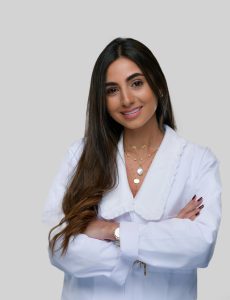
Sirine Abou Al Hassan is a US. registered clinical dietitian with extensive experience in nutritional management of chronic and diet-related diseases. Previously, Sirine worked as clinical dietitian specialized in obesity weight management, Child and Maternal Health and Eating Disorders. She graduated from University College London with a masters of science in Clinical Nutrition and Eating Disorders; Following on from a Bachelors of Science in Nutrition and Dietetics-Coordinated Program from the American University of Beirut, both with distinction