
Aman Hospital is a luxurious healthcare facility established in Doha, Qatar, and owned by Jaidah Holdings.
This new 100+ bed hospital will define the future of healthcare delivery in Qatar and the region by combining unparalleled professional expertise, cutting-edge technology, state-of-the-art equipment, service excellence, a relentless pursuit of medical innovation, and deluxe hospitality, all with a focus on patient-centered care.
In vitro fertilization (IVF) is a medical procedure where an egg is fertilized by sperm outside the body in a controlled laboratory environment. Once fertilization occurs, the resulting embryo develops for several days before being transferred into the uterus to establish pregnancy.
IVF represents the most effective technique within assisted reproductive technology (ART). The procedure allows specialists to manage fertilization conditions carefully, improve embryo quality assessment, and support implantation success.
Key medical components involved in IVF include:
These steps form the foundation of the IVF cycle, which typically spans several weeks from consultation to pregnancy testing.
Fertility specialists recommend IVF for a wide range of reproductive conditions affecting both partners.
Common medical situations include:
IVF also supports modern family-building pathways, including fertility preservation for cancer survivors and treatment plans involving donor eggs, sperm, or gestational carriers.
Understanding each stage of the IVF process helps patients prepare for the journey and cooperate effectively with their fertility care team.
The IVF journey begins with a detailed consultation with a fertility specialist in reproductive endocrinology.
During this visit, the fertility clinic evaluates both partners through diagnostic testing.
Fertility Test | Purpose |
Hormone blood tests | Evaluate ovarian reserve and reproductive hormones |
Ultrasound imaging | Examine ovaries, uterus, and follicle count |
Semen analysis | Assess sperm count, motility, and morphology |
Medical history review | Identify underlying fertility conditions |
Dr. Yazan Abdallah applies advanced reproductive medicine techniques and 3D ultrasound imaging to diagnose fertility issues accurately and develop a personalized treatment plan.
A natural menstrual cycle typically produces one egg per month. IVF treatment requires several mature eggs to increase fertilization opportunities.
During ovarian stimulation, patients receive hormone injections that stimulate the ovaries to produce multiple follicles.
Specialists closely monitor the stimulation phase through:
This monitoring ensures the eggs reach optimal maturity before retrieval.
Once follicles reach the desired size, the fertility clinic schedules the egg retrieval procedure, also known as follicular aspiration.
The process involves:
The procedure typically lasts 20 to 30 minutes and patients return home the same day.
Egg retrieval represents a critical stage of the IVF treatment cycle since egg quality directly influences embryo development.
On the same day as egg retrieval, a sperm sample is collected for fertilization.
Two fertilization methods are commonly used.
Eggs and sperm are combined in a laboratory dish where fertilization occurs naturally.
ICSI (Intracytoplasmic Sperm Injection) involves injecting a single sperm directly into the egg. This method improves fertilization success in cases of male infertility.
Additional male fertility techniques may include:
These specialized procedures help retrieve sperm when ejaculation does not contain viable sperm cells.
Once fertilization occurs, embryos grow inside a specialized incubator within the fertility laboratory.
Embryologists monitor embryo development for several days and assess:
High-quality embryos demonstrate strong implantation potential.
Clinics may also perform preimplantation genetic diagnosis (PGD) to identify chromosomal abnormalities before embryo transfer.
The embryo transfer represents the final clinical step of IVF treatment.
During this procedure:
Two transfer approaches exist.
Transfer Type | Description |
Fresh embryo transfer | Embryo transferred immediately after fertilization cycle |
Frozen embryo transfer | Previously cryopreserved embryos thawed for transfer |
Modern fertility clinics frequently use embryo freezing and cryopreservation techniques to preserve additional embryos for future cycles.
Approximately 10 to 14 days after embryo transfer, patients undergo a beta hCG blood test to confirm pregnancy.
If the test confirms pregnancy:
If pregnancy does not occur, the fertility specialist reviews treatment outcomes and adjusts future cycles.
Proper preparation improves treatment efficiency and supports reproductive health.
Patients should complete several medical evaluations before beginning an IVF cycle.
Important steps include:
Clinics may also recommend fertility preservation options, including egg freezing or embryo freezing, when patients plan future pregnancies.
Lifestyle factors significantly influence fertility outcomes.
Recommended lifestyle adjustments include:
A balanced diet supports reproductive health.
Key foods include:
Moderate exercise supports hormonal balance and healthy body weight.
Examples include:
Consistent sleep patterns regulate reproductive hormones and support ovarian function.
The IVF journey often includes emotional challenges. Fertility clinics encourage patients to maintain mental resilience through:
A strong support system improves patient experience during treatment.
IVF success rates depend on several biological and clinical factors.
Age Group | Average IVF Success Rate |
Under 35 | 50–55% |
35–37 | 40–45% |
38–40 | 25–35% |
Over 40 | 10–20% |
Clinics also perform genetic embryo screening to increase the chances of successful implantation.
Modern fertility centers provide multiple reproductive treatments beyond IVF.
Services typically include:
These services form a complete reproductive medicine and surgery program.
Dr. Yazan Abdallah leads fertility care with strong academic and clinical credentials.
Key highlights include:
Academic contributions include 30+ publications, 50+ presentations, and 50+ international conferences.
His research explores topics such as miscarriage diagnosis, embryo implantation, fertility preservation, and ultrasound evaluation of reproductive health.
The entire IVF treatment cycle typically follows this timeline.
IVF Phase | Average Duration |
Initial consultation and testing | 2–4 weeks |
Ovarian stimulation | 10–14 days |
Egg retrieval and fertilization | 3–5 days |
Embryo transfer and pregnancy testing | 10–14 days |
Each stage requires coordination between the patient, fertility specialist, and embryology laboratory.
Selecting the right fertility clinic significantly impacts treatment outcomes.
Important evaluation factors include:
Comprehensive fertility centers also offer dietary counseling, pharmaceutical guidance, nursing education, financial support services, and appointment coordination to support patients throughout the treatment journey.
The IVF journey combines science, technology, and compassionate care to support patients facing infertility challenges.
From the first fertility consultation to embryo transfer and pregnancy testing, each stage plays an important role in the path to parenthood.
Advancements in reproductive endocrinology, assisted reproductive technology, genetic testing, and cryopreservation continue to improve IVF outcomes worldwide.
With experienced fertility specialists such as Dr. Yazan Abdallah, advanced reproductive medicine services, and comprehensive patient support systems, couples can approach the IVF process with confidence.
For many families, IVF represents more than a medical procedure. It marks the beginning of a hopeful journey toward building a healthy family and achieving the dream of parenthood.
Book your consultation with Dr. Maisa Salman at Aman Hospital today.
The first private Hospital in Qatar to achieve JCI accreditation
Follow Aman
Contact
Quick Links
Centers of Excellence
© 2025, Aman Hospital. All Rights Reserved.
Designed & Developed by GTonics
Ms. Wazne received her Bachelor of Science degree in Pharmacy from the Lebanese American University in 2011 . She completed her Masters degree in Clinical Pharmacy from the Lebanese University. Ms. Wazne has worked at the American University of Beirut Medical Center for more than ten years. Ms. Wazne has given a variety of oral presentations to nurses, and pharmacists on local and national level . She has been certified from Harvard Medical School in Immuno-oncology and Cancer Genomics. She is an active member in the Order of Pharmacists of Lebanon. Her professional interests include medication safety and research.
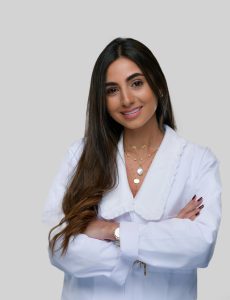
Sirine Abou Al Hassan is a US. registered clinical dietitian with extensive experience in nutritional management of chronic and diet-related diseases. Previously, Sirine worked as clinical dietitian specialized in obesity weight management, Child and Maternal Health and Eating Disorders. She graduated from University College London with a masters of science in Clinical Nutrition and Eating Disorders; Following on from a Bachelors of Science in Nutrition and Dietetics-Coordinated Program from the American University of Beirut, both with distinction